
Home smart decoradtech is a phrase you might not hear every day, but if you’ve been paying attention to how our living spaces are evolving, you’ve definitely seen it. It is the collision—sometimes messy, sometimes beautiful—of advanced technology and interior decoration. It is where the silicon chip meets the velvet sofa. And to be honest, it’s about time we talked about it properly. Because for the last ten years, I’ve watched houses turn into machines, and not always in a good way. We need to find the balance.
Table of Contents
When I started writing about design and technology a decade ago, things were different. You had your “smart home” enthusiasts, and you had your “interior design” purists. The tech guys loved wires. They loved blinking lights and massive server racks humming in the closet. The designers? They hated it. They wanted clean lines, organic materials, and absolutely no plastic routers visible on the mahogany shelf. But home smart decoradtech changes that. It bridges the gap. It is the philosophy that tech shouldn’t just be smart; it should be invisible. Or at least, it should be beautiful.
The Evolution of the Smart Home (And Why It Was Ugly)
Let’s be real for a second. The early smart home was ugly. It was functional, sure, but it was ugly. I remember walking into a high-end apartment in 2015 that had voice control for everything, but there were sensors stuck to the walls with adhesive tape and a tablet mounted clumsily next to a beautiful oil painting. It felt jarring. It felt like the technology was invading the space rather than enhancing it.
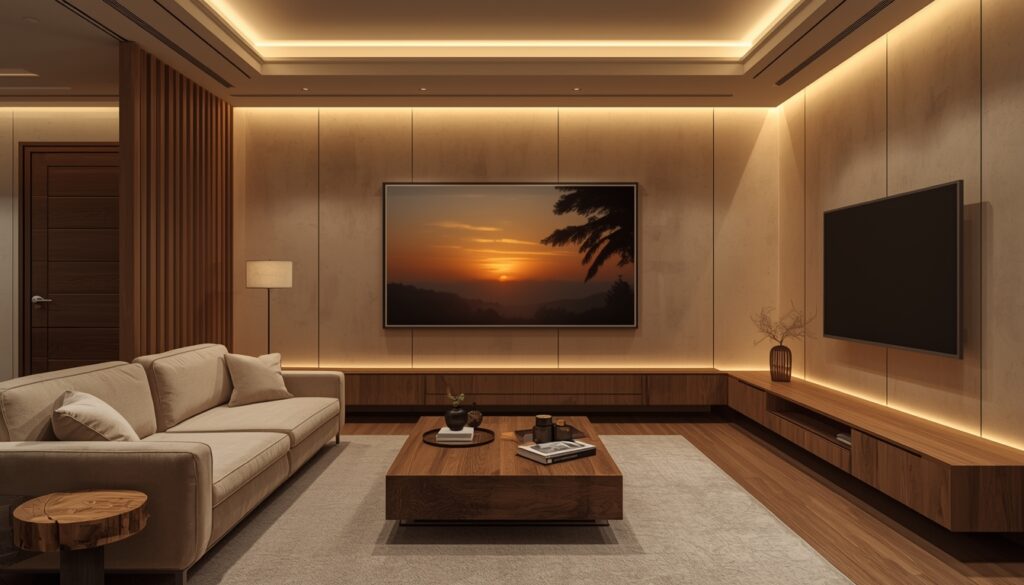
This is where home smart decoradtech comes into play. It’s a response to that ugliness. It is the industry finally realizing that humans don’t want to live inside a computer; we want the computer to live inside our homes, quietly and respectfully.
In contrast to this early era of clunky gadgets, we are seeing a shift toward “ambient computing.” This is a fancy way of saying technology that is there when you need it and gone when you don’t. Think of the Frame TV by Samsung. When it’s off, it’s art. When it’s on, it’s Netflix. That is the essence of this movement. It is decoration first, technology second. But at the same time, the technology is more powerful than ever. It’s a paradox, really. The better the tech gets, the less we should see it.
What Exactly Is Home Smart Decoradtech?
You might be asking, what falls under this umbrella? Home smart decoradtech isn’t just one thing. It’s a category. It includes smart lighting that mimics the circadian rhythm of the sun, not just blinding white LEDs. It includes speakers that look like sculptures. It includes fabrics that can control temperature.
It is interesting, actually, how much “adtech” (advertising technology) and data play a role here too, though we don’t like to talk about it. Smart devices learn our habits. They know when we wake up, what we watch, and how warm we like the room. In a consistent manner, they gather data to optimize our comfort. But from a design perspective, the “decor” part is what matters to the eye.
I often tell people that if you walk into a room and notice the technology immediately, the design has failed. The best home smart decoradtech is invisible. It’s the hidden wireless charger built into the stone countertop. You put your phone down, and it charges. No cables. No fuss. Just magic. That is the goal.
Read Also: Using Auto Scroll in Laptop | Why Auto Scroll on Reels Controls Your Attention
The Struggle Between Logic and Emotion in Design
Here is the thing about humans—we are illogical creatures. We say we want efficiency, but we actually crave comfort. A purely efficient home would be a white box with a drain in the floor. Easy to clean. Very efficient. But who wants to live there? Nobody.
We want texture. We want warmth. We want history.
This is where the challenge lies. How do you integrate a voice assistant that connects to the entire internet into a room that is supposed to feel like a cozy, rustic library? It’s hard. It’s really hard. Home smart decoradtech attempts to solve this by disguising the digital as the analog.
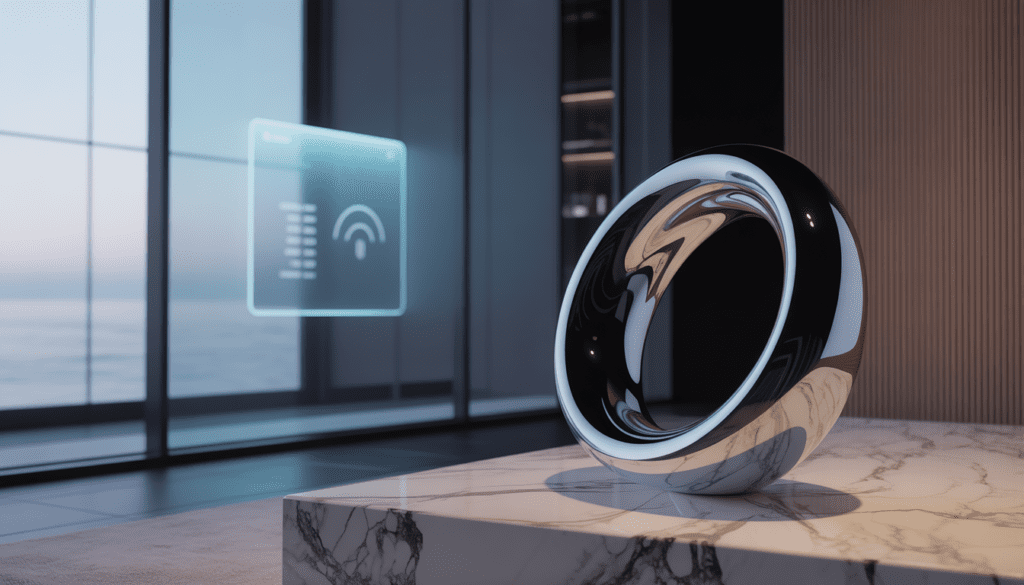
For example, there are now smart interfaces that look like wood. You touch a piece of timber, and the lights dim. There are no screens. No glowing buttons. Just wood. This satisfies our logical need for control and our emotional need for nature. It blends them. On the other hand, some designers go the opposite route—they celebrate the tech. They make the speakers look like alien artifacts. Chrome, glass, floating orbs. That is also a valid interpretation of home smart decoradtech. It says, “The future is here, and it is shiny.”
But personally? I prefer the invisible approach. I think technology should be a servant, not the master of the house. It should be heard (when requested) but not seen.
Implementing Home Smart Decoradtech in Your Space
So, how do you actually do this? You don’t need to tear down your walls. You just need to be thoughtful. Start small.
1. Lighting is Everything If you buy one thing, buy smart bulbs. But not just any bulbs. Get the ones that can change temperature. Warm light for the evening, cool light for the morning. This affects your brain chemistry. It’s biology. And cover them with beautiful fixtures. A naked smart bulb is just a piece of hardware. A smart bulb inside a vintage brass lamp? That is home smart decoradtech.
2. The War on Wires Nothing kills a vibe faster than a tangle of black cables. It looks messy. It looks anxious. Use cable management. Or better yet, switch to devices that use long-life batteries or wireless power. Furniture manufacturers are finally catching on. You can buy nightstands with power integration. Use them.
3. Art That Moves Digital art frames have come a long way. They used to look pixelated and cheap. Now, with matte screens, you can barely tell the difference between a screen and a canvas. This allows you to change your decor instantly. One day it’s a Monet; the next day it’s a family photo. That flexibility is the core benefit of digital decor.
The Human Limitations and The AI Strengths
We have to admit something. Humans are forgetful. We leave the lights on. We leave the heating running when we go on vacation. We forget to lock the door. We are flawed. Beautifully flawed, but flawed.
Technology, on the other hand, is consistent. It doesn’t forget. A smart system ensures the house is secure and efficient every single time. Nevertheless, technology lacks soul. An AI doesn’t know why you like that specific dim setting for dinner parties; it just knows you use it. It doesn’t understand “mood” in the way we do. It only understands data points.
That is why the human element in home smart decoradtech is so vital. We provide the intent; the machine provides the execution. We are the directors; the house is the stage crew. When it works well, it’s a symphony. When it doesn’t… well, it’s just a frustration. We’ve all yelled at a smart speaker that refused to play the right song. It happens. It’s part of the growing pains of this era.
Why “Smart” Doesn’t Mean “Complicated”
There is a misconception that home smart decoradtech is for geeks. That you need to know how to code to turn on your lamp. If that is the case, the product is bad. Simple as that. Good design is intuitive.
My grandmother should be able to walk into a smart home and turn on the light. If she has to download an app to do it, you have failed. The physical switch should still work. The voice command should be optional. The redundancy is necessary because networks fail. Wi-Fi goes down. If your house stops working because the internet is out, that’s not smart. That’s stupid.
True home smart decoradtech builds layers of control. It respects the old ways while introducing the new ways. It’s a handshake between the past and the future.
The Future Trends to Watch
Where is this going? I think we are moving toward “predictive homes.” Right now, we have to tell the house what to do. “Turn on lights.” “Set heat to 72.” Soon, the house will just know. Sensors will detect that you are reading, and the light will focus. It will detect that you are sleeping, and the temperature will drop.
And the materials will change. We will see “smart surfaces” everywhere. Imagine a kitchen counter that can display a recipe right on the granite surface and then disappear when you are done cooking. That is the holy grail of home smart decoradtech. The entire house becomes an interface.
But, and this is a big but—we must be careful about privacy. A house that listens and watches is useful, but it is also creepy. The manufacturers need to respect that. If they don’t, people will reject the tech. We invite these devices into our most private spaces, our bedrooms, our bathrooms. Trust is the currency here.
Youtube Video For Home smart decoradtech
Conclusion For Home smart decoradtech
At the end of the day, our homes are our sanctuaries. The world outside is loud, chaotic, and demanding. Our homes should be the opposite.
Home smart decoradtech has the potential to make our lives easier, more beautiful, and more efficient. But only if we use it wisely. We shouldn’t fill our homes with gadgets just because we can. We should curate. We should select the pieces that actually add value and hide the rest.
I have seen the trends come and go. I have seen 3D TVs die. I have seen curved screens fade away. But the integration of intelligence into our furniture and architecture? That isn’t going anywhere. It is just getting started. So, embrace it. But don’t let it take over. Keep your vintage rug. Keep your old books. And let the smart lights cast a warm glow on them. That, my friends, is the balance we should aim for.
