
Engine Size Calculator
Accurately calculate your engine’s total displacement
Understanding the Engine Size Calculator
Engine size calculator tools are everywhere these days, but if you’re like me, you probably spent a good chunk of your youth thinking that bigger was always better without really knowing why. It’s funny, actually. We obsess over the numbers on the back of a car—that little 2.0L or 5.0L badge—yet most people couldn't tell you how that volume is actually measured. That’s where the engine size calculator comes into play, bridging the gap between raw mechanical engineering and the simple math we use to understand power.
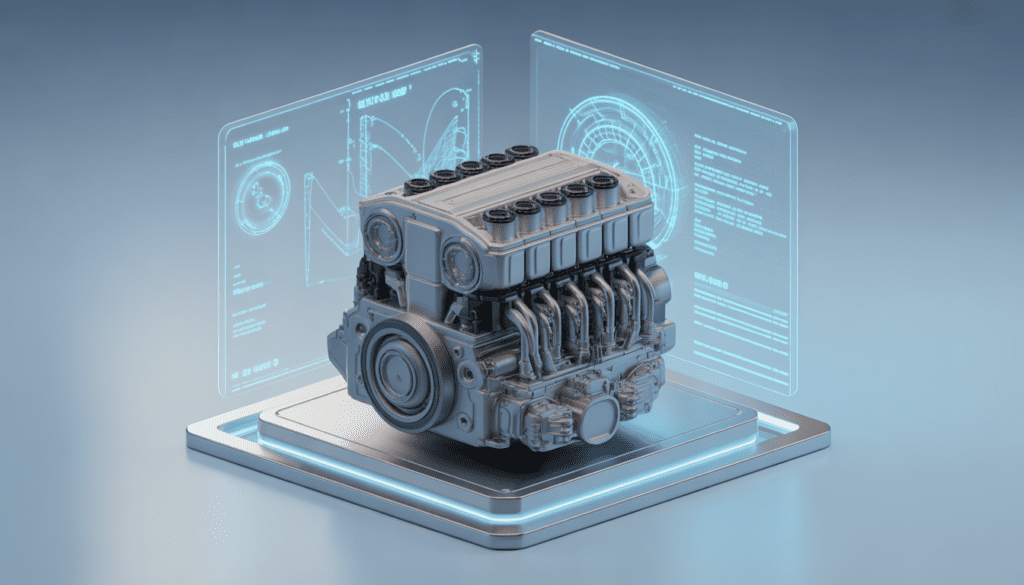
When we talk about engine size, or displacement, we’re essentially talking about the total volume of all the cylinders in an engine. It’s the "breath" of the machine. If you’ve ever tried to calculate this by hand on a greasy workbench, you know it’s easy to drop a decimal point or forget to multiply by the number of cylinders. Honestly, it's a bit of a headache. In contrast to this manual struggle, using an engine size calculator makes the whole process feel almost too easy, though it strips away some of the "soul" of the grease-monkey era.
Table of Contents
The Geometry of Power: How the Math Works
To understand what an engine size calculator is actually doing, you have to look at the cylinder as a simple geometric shape. At its core, an engine is just a collection of pumps. You have the bore, which is the diameter of the cylinder, and the stroke, which is the distance the piston travels up and down.
Read More: The Tesla Battery Degradation Chart: A Deep Breath and a Reality Check on EV Longevity
The formula is pretty standard, involving the radius of the bore squared, multiplied by $\pi$, and then multiplied by the stroke. Then you multiply that by the number of cylinders. It sounds straightforward, doesn't it? Nevertheless, it’s easy to get mixed up between millimeters and inches. I’ve seen guys build entire engines only to realize their compression ratio or displacement was off because they mixed up their units. A reliable engine size calculator prevents those "back to the drawing board" moments that haunt every DIY mechanic’s dreams.
Why Displacement Defines Your Drive
There is an old saying in the automotive world: "There is no substitute for cubic inches." While turbocharging and hybrid systems are changing the game, the fundamental displacement calculated by an engine size calculator still dictates the base character of a vehicle.
- Small Displacement (1.0L - 2.0L): Usually found in economy cars. They are efficient, sure, but they often feel like they’re working overtime just to get up a hill.
- Medium Displacement (2.5L - 3.8L): The sweet spot for many. It provides enough torque for daily driving without draining your bank account at the pump.
- Large Displacement (4.0L and up): This is where the "muscle" lives. It’s about low-end grunt and that effortless feeling of power.
Human Error vs. Digital Precision
In my ten years of writing about cars, I’ve noticed a shift. We used to rely on intuition and thick paper manuals. Now, we rely on algorithms. But here’s the thing: a machine doesn't know why you are using an engine size calculator. It doesn't know if you're trying to bore out a classic Chevy block or if you're a student trying to pass a physics final.
The human element is about the "why." We want to push limits. We want to see how much volume we can squeeze out of a standard block. On the other hand, the engine size calculator only cares about the "how." It provides the logic that balances our sometimes irrational desire for more speed. It’s a partnership. We provide the ambition; the calculator provides the reality check. Sometimes reality bites.
The Role of an Engine Size Calculator in Performance Tuning
If you are into tuning, an engine size calculator isn't just a luxury; it’s a requirement. When you start talking about "stroker kits"—where you increase the stroke of the piston to get more displacement—the math gets hairy. You aren't just changing the volume; you're changing the velocity of the piston and the stress on the connecting rods.
In a consistent manner, tuners use these tools to ensure they aren't pushing the metal beyond its physical breaking point. Because, let’s be honest, we’ve all wanted to see what happens if we push a little further. But breaking a crankshaft because you miscalculated your displacement by a few cubic centimeters? That’s an expensive mistake. The engine size calculator is the silent observer that keeps your hobby from becoming a tragedy.
Why We Still Care About These Numbers
In an era of electric vehicles, you might think the engine size calculator is becoming a relic of the past. EVs don’t have cylinders. They don’t have bores or strokes. They have kilowatts and battery densities. At the same time, the internal combustion engine is far from dead. There is a visceral, almost primal connection we have to the sound of an engine that has been perfectly sized for its chassis.
I remember the first time I used an engine size calculator to figure out the specs on an old motorcycle I was restoring. I was convinced it was a 500cc bike. After punching in the numbers—bore, stroke, two cylinders—the screen flashed 440cc. I was disappointed. It felt like the bike had lost some of its "toughness" just because the number was smaller. But that’s the human brain for you. We attach emotion to numbers. The engine size calculator doesn't care about your feelings. It only cares about the truth.
Final Thoughts on Mechanical Accuracy
At the end of the day, whether you are a professional builder or just someone curious about what's under the hood of your sedan, understanding displacement is key. Using an engine size calculator allows you to speak the language of the machine. It’s about precision. It’s about knowing exactly what you’re working with before you turn the key.
Life is full of guesses, but your engine displacement shouldn't be one of them. It's better to know. It's better to be sure.